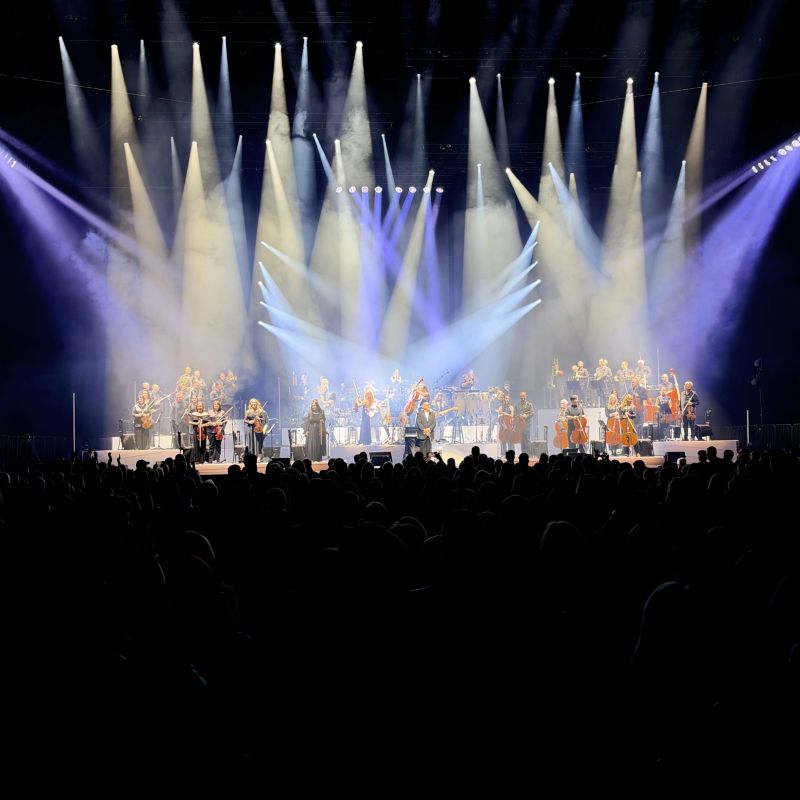
I’m used to hearing Hans Zimmer’s music played at home by my son on the piano. We got to experience it with a full orchestra at the OVO Hydro. It was a brilliant reminder of why I talk so much about harmony, not balance.
Work-life balance. Balancing priorities. Balanced scorecards.
We use the word constantly, but “balance” can often make us think in equal measures. Equal time, equal effort, equal attention. The scales should balance! But life, teams, and organisations rarely work like that.
So, I prefer to seek harmony.
Think about this orchestra. Different people, different instruments, different notes, different timing and different volumes. The triangle doesn’t need as much airtime as the violin. The brass section doesn’t need to play constantly. Sometimes one instrument needs to dominate, while another needs to be completely silent. But when everyone contributes what is needed, when it's needed, the result can be beautiful. (Thanks Matt Dunkley 👏)
Now imagine replacing the drummer with an enthusiastic 5-year-old who has never played before. Everyone else could be world-class, but the whole thing could quickly become chaos.
Life and organisations can be like that too. The “5-year-old drummer” might be one broken process, one poor habit, one overloaded person, one unresolved relationship, or one hidden constraint that everyone else is working harder to compensate for.
And quite often our response is to make everyone else play louder. More effort. More meetings. More checking. More pressure. More hours.
Maybe the better approach is to ask: What is the 5-year-old drummer in the system right now? And what would happen if, rather than compensating for it, we dealt with it?
With a subtle change in our language, maybe balance isn’t the goal.
Maybe it’s harmony. 🎻🥁